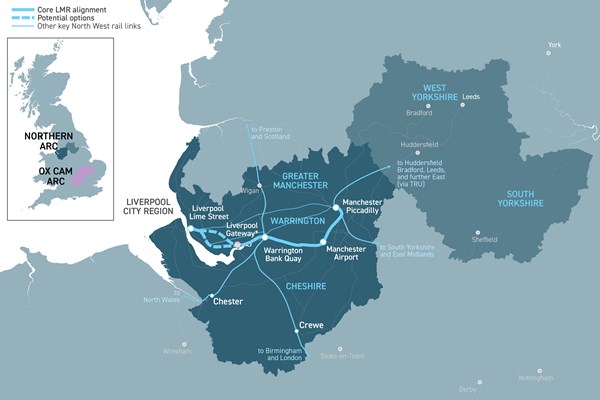
A new Liverpool-Manchester Railway could unlock £90bn in economic growth and transform infrastructure delivery in the UK, according to a report backed by regional leaders and industry experts.
The proposed line, running from Liverpool Lime Street to Manchester Piccadilly, with key stops at Liverpool Gateway, Warrington Bank Quay, and Manchester Airport, would generate £15bn in economic activity during construction and support 22,000 jobs. It forms a central pillar of the Northern Arc, a growth corridor linking the Mersey to the Pennines.
Mayors Steve Rotheram and Andy Burnham, alongside Huw Merriman, Chair of the Liverpool-Manchester Railway Partnership Board, are calling for a locally led delivery model to fast-track the scheme. They argue the project can be shovel-ready by the early 2030s, retaining the skilled HS2 workforce and avoiding historic “boom and bust” cycles in infrastructure delivery.
The line, though shorter than London’s Elizabeth Line or East-West Rail, could deliver outsized benefits by reducing journey times, increasing rail capacity, and placing 500,000 more people within 30 minutes of both city centres.
Five new growth zones around key stations are projected to support up to 500,000 new homes and thousands of additional jobs, boosting long-term regeneration.
Rotheram described the scheme as a “once-in-a-generation opportunity” to “connect people to better jobs, homes, and experiences.” Burnham called it “a credible, locally led model that reflects 21st-century growth priorities,” while Merriman emphasised the need to rebalance UK investment and embed lessons from HS2.
The government previously pledged £17bn to the route following the cancellation of HS2’s northern leg, and the project featured in the 2024 King’s Speech via the High Speed Rail Bill.
Local leaders are now seeking formal inclusion in the government’s upcoming 10-Year Infrastructure Strategy, with the project pitched as a cornerstone of national economic growth and regional renewal.